Youth Spotlight – Inbal Tzafrir
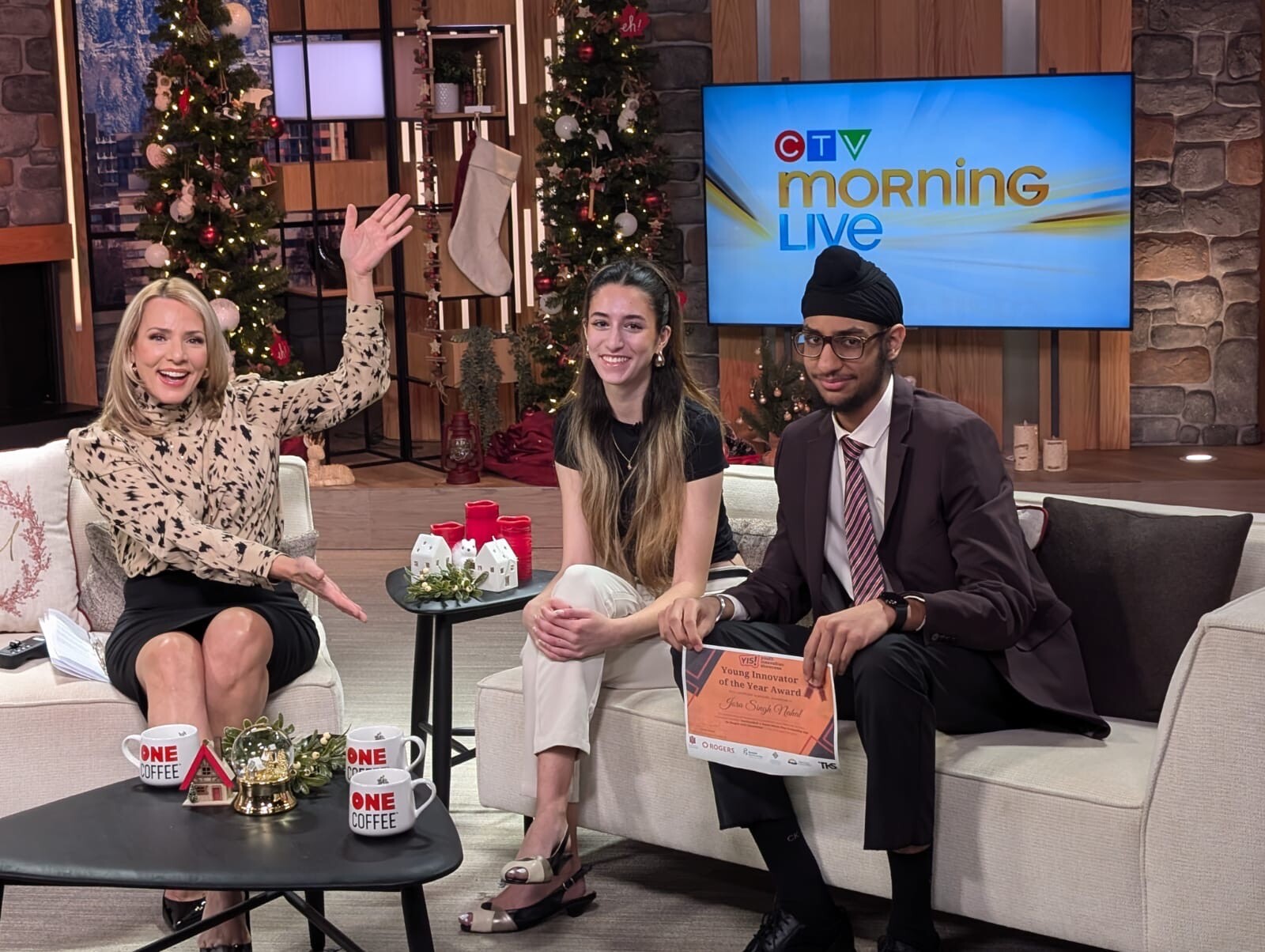

Age: 17
School: Delta Secondary School
What was your experience with science fairs?
I have had a passion for science since I was little and participated in many STEM-related programs, but my first official science fair experience came in 2024 at the South Fraser Regional Science Fair. It was an incredible opportunity to conduct research, present it to judges, receive meaningful feedback, and even win three special awards in the biomedical and coding categories.
Being the only student from my school to participate was a unique challenge, but it inspired me to expand the STEM Innovators Club I founded at my school — where I now encourage and mentor other students to get involved. Science fairs, to me, are a powerful platform for connection, innovation, and creativity, offering students early opportunities for research and entrepreneurship.
What was your inspiration behind the project with which you won the Youth Innovation Showcase?
The inspiration behind my project came from my sister’s experience with misophonia, a condition characterized by a limited tolerance to certain sounds or stimuli — such as eating noises. Diagnosed at 13, she faced significant challenges due to a lack of awareness, education, and accessible treatment options.
Motivated by the limited resources available, I began researching ways to raise awareness and improve accessibility for those living with misophonia. I spoke with patients, consulted mentors such as Dr. Goldberg from UBC’s Department of Psychology, and analyzed existing treatments. My goal was to design a user-friendly, affordable, and accessible solution that could fill the gaps in existing care.
This led to the creation of EaseApp, a mobile app designed to help combat misophonia. It integrates techniques inspired by Cognitive Behavioral Therapy (CBT) and auditory support methods, while remaining affordable and easy to use. I’m now working to gather feedback and improve its functionality for wider use.
What other projects are you working on this year?
In addition to my research, I founded Rosie’s Network, a non-profit STEM club for self-identifying female students. The organization connects high school mentors with elementary school students to inspire and empower girls in STEM fields.
We’ve already partnered with three elementary schools and reached over 300 students, and we’re now expanding the program district-wide. Rosie’s Network provides a space for mentorship, leadership, and growth — building confidence and inclusivity in science education.
What will you do with the money you won from YIS?
I plan to use the prize money to collaborate with medical institutions and healthcare researchers to expand our outreach. It will also help grow the Misophonia Wellness Society, the non-profit I co-founded alongside EaseApp, which provides a safe, educational, and supportive community through free and frequent support groups.
The funds will go toward further developing EaseApp, enabling collaboration with professionals in the medical and tech fields to enhance the app’s accessibility and impact.
What advice would you give to students participating in YIS for the first time this year?
Focus on a project that genuinely connects with you — something that feels personally meaningful and has real-world impact. Be creative, stay curious, and don’t be afraid to put yourself out there.
Approach the experience with passion and determination, and be open to feedback and collaboration. YIS is not just about science — it’s about community, learning, and growth. Use this opportunity to inspire others and spread awareness about the value of innovation.
What are your future plans, and where do you plan to take your projects?
As I begin university next year, I plan to major in biomedical engineering with a potential minor in business. I hope to continue developing EaseApp and expanding the Misophonia Wellness Society, while also growing Rosie’s Network into a larger organization that promotes female participation in STEM across the region.
Looking ahead, I’m excited to keep pursuing new research projects that merge technology, health, and social impact — creating change that helps people in tangible, meaningful ways.
