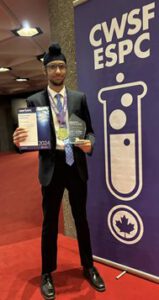
Youth Spotlight – Jora Singh Nahal
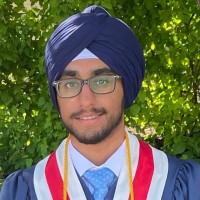
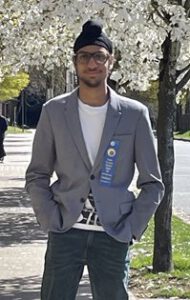
Age: 15
School: University Hill Secondary
What was your experience with science fairs? What has encouraged you to want to come back?
I have always had a strong passion for STEM since I was a child. I started participating in science fairs in grade 4, and these experiences allowed me to showcase my ideas to the world and enhance my communication skills through interactions with judges and mentors. They also provided valuable insights into entering the professional world—simulating real-life scenarios like client meetings.
The recognition I received for my work has motivated me to continue innovating and crafting science projects.
You participated in the Greater Vancouver Regional Science Fair and made it to the Canada-Wide Science Fair. Can you tell me about the project that brought you there?
For my first project in grade 7, I developed a drowsiness detection app titled “Drowsiness Detection and Virtual Friend Speech-Robot for Safe Driving.” The app tracks a driver’s eyes and alerts them if they are falling asleep. It was showcased at the Cariboo Mainline Regional Science Fair in Kamloops and won a bronze medal at the virtual Canada-Wide Science Fair (CWSF) during the pandemic.
My next project, DeviceABLE, is a novel hands-free computing app designed for people with disabilities. Hands-free computing is vital for individuals who cannot use their hands, but current solutions are often bulky, expensive, and less accurate. DeviceABLE provides a free, precise, and hardware-free alternative that allows users to control their computers through head movements and voice commands.
This project earned multiple awards at both the Greater Vancouver Regional Science Fair and CWSF. I’ve been participating in the Youth Innovation Showcase (YIS) since grade 8, and this marks my third project.
What was your inspiration behind the project?
The inspiration for my first project came from personal experience—seeing my mom struggle with drowsiness during long drives sparked the idea of creating an alert system for drivers. Knowing that drowsiness-related accidents are among the most fatal, second only to drunk driving, I wanted to find a practical way to prevent such incidents.
During the pandemic, with more time at home and online learning, I taught myself to code and began exploring hands-free computing for people with disabilities. With about 40% of motor-impaired individuals unable to use their hands, I recognized the need for accessible tools. DeviceABLE enables users to interact with their computers comfortably through head movements and voice control, reducing the limitations of traditional hardware.
The process of refining and improving the project has been incredibly rewarding and has driven my passion to keep innovating.
What project are you working on this year?
I’m continuing to develop DeviceABLE, but I plan to give it a significant upgrade to make it back to CWSF. By integrating artificial intelligence (AI), I aim to streamline user interaction, minimize manual effort, and enable automated functionalities that work seamlessly alongside the user.
What advice would you give to students participating in YIS for the first time this year?
Choose a project you’re truly passionate about—something that excites you and keeps you motivated throughout the process. Science fair projects require time and dedication, and it’s easier to stay committed when you genuinely enjoy your work.
Perseverance is key: results may not always be perfect, and multiple trials are often necessary. Focus on creating something you’re proud of. My two-year journey with DeviceABLE taught me the importance of resilience and continuous improvement.
Science fairs are not only fun and well-organized but also help build a strong community where lifelong friendships and professional connections are formed. My second time at CWSF in Ottawa was incredibly memorable, and I hope to go again. Once you’re part of this community, you can achieve great things together—the science fair world is more than just about science; it’s about collaboration, growth, and shared passion.
=